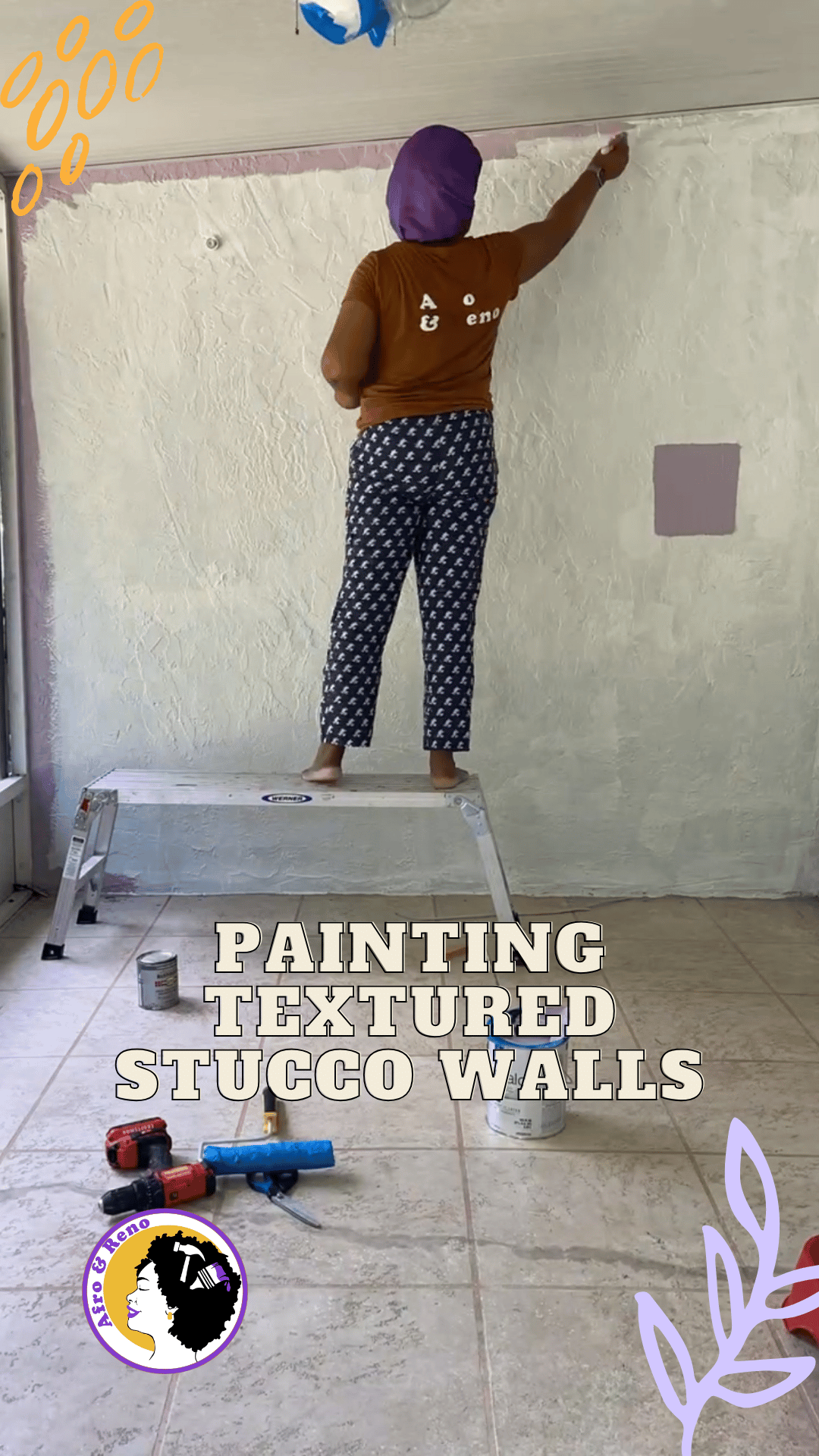
How to paint textured stucco outdoor walls

Do you have stucco with a heavy texture?
Here’s how I painted the stucco walls with a roller and some tips on how to get into all those nooks and crannies


In week 6 of the One Room challenge we tackled the best tips and tricks for painting heavily textured outdoor walls. I only had two walls to paint so I am using a roller and a paint brush to cut in the edges but if I were painting a larger area it’s best to use a paint prayer. Painting your exterior walls is a great way to add curb appeal or in my case to test out the color i’d like to use for the rest of the house in the future.
We started out this project week one with Prepping The Patio by cleaning it top to bottom, that included the walls. Why? Years of dirt, grime and pollen had caked the walls. If you want your paint to adhere well, you need a nice clean base. I pressure washed the walls, ceiling and floors. I used concrete filler and caulk to clean up any cracks in the wall and where the floor meets the wall. In this post I’ll show you what I used and most importantly why.
Do you know what kind of stucco wall texture you have? This guide over at The Stucco Guy‘s blog has a detailed info about different sttuffoc finished, textures with pictures! He also has a YouTube channel with all kind of information!
Tools for the paint job
- Exterior stucco paint (masonry paint or Limewash recommended)
- Primer (if needed)
- Paint rollers with thick nap (¾ to 1 ¼ inch)
- Paint sprayer (For better coverage and Large areas)
- Paint Brushes for corners and edges
- Drop cloths
- Painter’s tape
- Pressure washer or hose with scrub brush
- Caulk for sealing cracks
- Protective gear (gloves, goggles, mask)
First: Prep Prep and More Prep!!
Clean your walls!
- Use a pressure washer or scrub with a mild detergent to remove dirt, mold, and debris.
- Allow the wall to dry fully before painting.
This may seem obvious but a lot of adhesion problems stem from improper preparation. Spending a little bit of time to make sure your surface is clean, free of dirt and grime, means you’ll have a long lasting finish for years to come. Your outside walls go through a lot: rain, the suns rays/UV damage, the wind and and in my case hurricanes and debris whipping on the walls. Give your walls a good clean, get them ready for a nice smooth coat of paint.


Repair Cracks and Damage
- Inspect the wall for cracks, use a stucco repair caulk for small gaps and a stucco repair patching concrete mix for larger ones.
- Sand down any rough patches after everything cures
Most stucco repair caulk and patches are elastomeric. You want to use these instead of regular caulk and concrete patch as it allows for movement in case the cracks are due to house settling. More rigid repair items can crack if they do not have elastomeric properties

Prime (If Needed)
- Use a primer for better adhesion and color uniformity. If you are going for a dramatic change it’s a good idea to user a gray primer when going darker.
- Apply a coat of primer with a roller or sprayer then let it dry fully.
- Make sure your primer is rated for exterior use
- Check the can for re-coat times and how long to wait before applying top coat (your final color)
Choose the Right Paint and Tools
Select the Best Paint for Stucco
- Use a paint that is elastomeric or masonry paint for flexibility and durability. Make sure the paint is for exterior use, indoor paint does not have the UV protection and mold/mildew protection that exterior paint has!
- Choose the right finish (flat or satin is better at hiding imperfections and roller marks).
Picking the Right Tools
- Use a roller with thick nap for deep texture. Your paint can should tell you what kind of roller you will need and nap
- If you are doing a large area, consider renting or buying a paint sprayer for even coverage
Time to paint!
Painting Stucco walls with a roller
- If you are using a roller push the paint into deep crevices and rough parts of the wall. To make sure it gets in all the crannys.
- Work in small sections to make sure you get better coverage.
- After applying the first coat, allow it to dry according to the directions in the can. I used Sherwin Williams Emerald exterior paint and it requires 4hrs between coats. I allowed it to dry completely to ensure proper curing.
- Apply a second coat and make sure to overlap your lines so that you get proper coverage
Painting stucco walls with a Paint Sprayer
- Prep your paint sprayer follow all manufacturer instructions for priming the sprayer
- Strain your paint, This makes sure it won’t clog the sprayer tip
- Thin your paint, this helps get a smoother finish
- As you spray move your whole arm to paint, not your wrist. This ensures you maintain the same distance from the wall as you go


Maintenance Tips for a Long-Lasting Finish
- Regularly clean your walls prevent dirt buildup. If you can’t be bothered to keep a schedule I just do it after “The Pollening” (spring when the trees release al their pollen and cover everything)
- Inspect your walls for cracks or peeling paint annually. Check the cracks you filled to see if they expanding as it might indicate more serious issues.
- Repaint your exterior walls every 7-10 years to maintain a fresh look. If you are in Florida like I am, you may have to do it sooner due to the heat and humidity and Hurricanes.

Conclusion
Painting textured stucco walls doesn’t have to be a paint. With a bit of prep, the right tools for the job and a little bit of time you too can do this all by yourself! Is this a project you would tackle? Have you painted your stucco walls before? Let me know in the comments! Subscribe to our newsletter for more DIYs any homeowner can do in your inbox!
Spring ORC 2024 Patio Refresh Posts: Week 1 | Week 2 | Week 3 | Week 4 | Week 5 | Week 6 | Week 7 | Week 8: Reveal